

How Do I Wear a Moroccan Kaftan, and When Is It Appropriate?
Heritage HandmadeShare
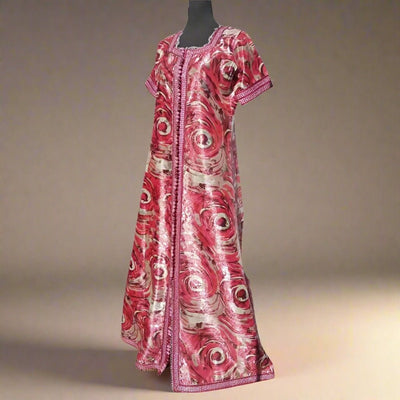
Wear it like a long dress: leave it loose, or close it with a belt at the waist. It suits weddings, henna nights, engagements, Eid and dinners, and lighter silk styles also work for relaxing at home or traveling. UNESCO describes the Moroccan caftan as a garment worn by people of all genders and ages for special occasions and celebrations, so when in doubt, an occasion that feels special is a good place to wear one.
Here are the questions people ask next.
What should I wear with a kaftan?
Keep the rest simple, because the embroidery does the talking.
- A belt: a Moroccan mdamma belt pulls the shape in at the waist and finishes the look.
- Shoes: flat sandals for the day or Eid lunch, heels or embellished flats for an evening.
- Jewelry: one statement piece, such as earrings or a necklace, rather than many.
- Hair: pulled back or up lets the neckline and embroidery show.
For more ideas, see from boho to black-tie: how to dress up a Moroccan kaftan.
Which kaftan should I choose for which occasion?
| Occasion | What to choose | Where to look |
|---|---|---|
| Wedding guest | A jewel tone such as emerald, burgundy or royal blue, or a soft pastel | Wedding kaftans |
| Eid or family dinner | A silk kaftan, simple and elegant | Kaftan dresses |
| Evening party or gala | Velvet or brocade with rich trim | Kaftan dresses |
| Casual day out or travel | A modern, lighter kaftan | Modern kaftans |
| Collectors and special finds | A one-of-a-kind vintage piece | Vintage kaftans |
What should I avoid at a wedding?
If you are a guest, leave white and ivory to the bride, and leave the heaviest gold embroidery to her too. Brides usually choose white, ivory or gold for the ceremony and change into colored takchitas through the night. A jewel tone or a soft pastel keeps you safely in the guest zone.
Can I wear a kaftan if I am not Moroccan?
Yes. Kaftans have been worn across many cultures for centuries, and wearing one to a wedding, Eid or dinner is not a costume. The best way to wear it with respect is to buy from the artisans who make it, wear it as it is meant to be worn, and enjoy it. If you want the story behind it, read how the Moroccan caftan became a timeless style staple.
Can I wear a kaftan every day?
Some styles, yes. Modern kaftans are easy to wear for casual outings, work events, travel and relaxing at home, and many move from day to evening with the right accessories. Heavier velvet and brocade kaftans are best saved for occasions.
How do I look after it?
Follow the care guidance on the product page. In general, hand wash gently in cool water with a mild detergent, avoid wringing, air dry in the shade, and iron or steam on low heat from the inside. Delicate and vintage pieces need extra care, so read how to care for your kaftan first.
What size should I order?
Compare the listed measurements in inches with a dress that fits you well, and use our size chart. Sizes run from small to plus size XXL, and many styles are made to order. Not sure? Write to hello@theheritagehandmade.com and we'll help.
Frequently asked questions
Do I wear anything under a kaftan?
That is your choice. A simple slip or a fitted layer works, and silk kaftans often look best with a smooth layer underneath.
Should I wear a belt?
A belt is optional, but it gives the kaftan shape and is traditional with a takchita.
Is a kaftan formal or casual?
Both. Velvet and brocade are formal; lighter modern styles are casual.
Can men wear a kaftan?
Yes. UNESCO describes the caftan as worn by people of all genders. For menswear, see our Moroccan fashion for men.
How long does delivery take if I need it for an event?
Orders leave our Marrakech workshop in 1 to 3 business days and arrive in about 4 to 6 business days in the USA. Order early for a wedding.


